If you’ve ever chatted with people online, whether you’re looking for love, making connections or just catching up, you’ve probably noticed this little thing that can be a bit annoying:
You ask a question.
They ignore it.
Then they ask their own.
And somehow… you answer.
Just like that, the conversation changes.
The Pattern We Don’t Notice (At First)
It usually starts out harmless:
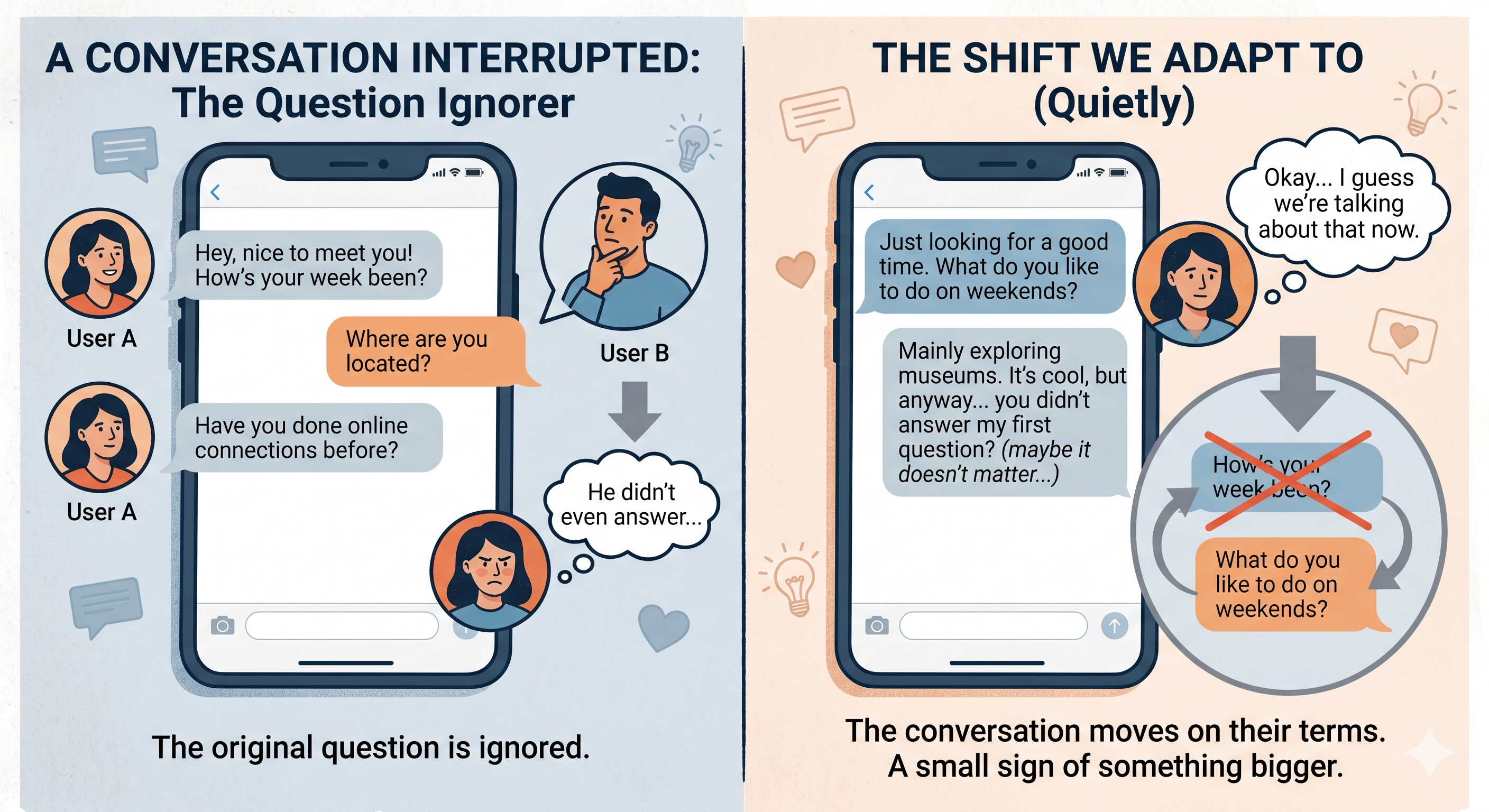
Nice to meet you. Have you been in an arrangement before?
And instead of answering:
Where are you located?
No response. Just a change of subject.
What’s interesting is not just that this happens, it’s how often the other person lets it go. The original question is quietly forgotten, and the conversation moves on their terms.
It might seem small at first, but it’s not.
Why This Matters More Than It Seems
Ignoring a question isn’t always bad. Sometimes people are busy, excited or just not very good at chatting. But patterns matter more than just one time.
When someone keeps skipping your questions, a few things might be happening:
They’re in charge of the conversation – steering the topics without really listening to yours
They’re not curious – not really interested in what you have to say
They’re testing limits – seeing what they can get away with
They’re just not good at talking – which, on its own, can still be a problem
More importantly, how you react to it sets the tone. If you quickly agree and answer their new question, you’re (often without even realizing it) saying:
It’s okay if you ignore me.
And some people might take that as a sign to keep doing it.
The Subtle Power Shift
Conversations are like a little negotiation, about who gets attention, who gets respect and who gets interested.
When one person asks and the other answers, things are balanced.
When someone asks a question and it’s brushed aside, but they still answer another question, it throws off the balance.
Now, one person is leading the conversation, and the other is just following along.
This is how conversations can quietly turn one-sided.
A Simple Fix That Works Surprisingly Well
Here’s a simple way to handle this without getting into a fight or being rude:
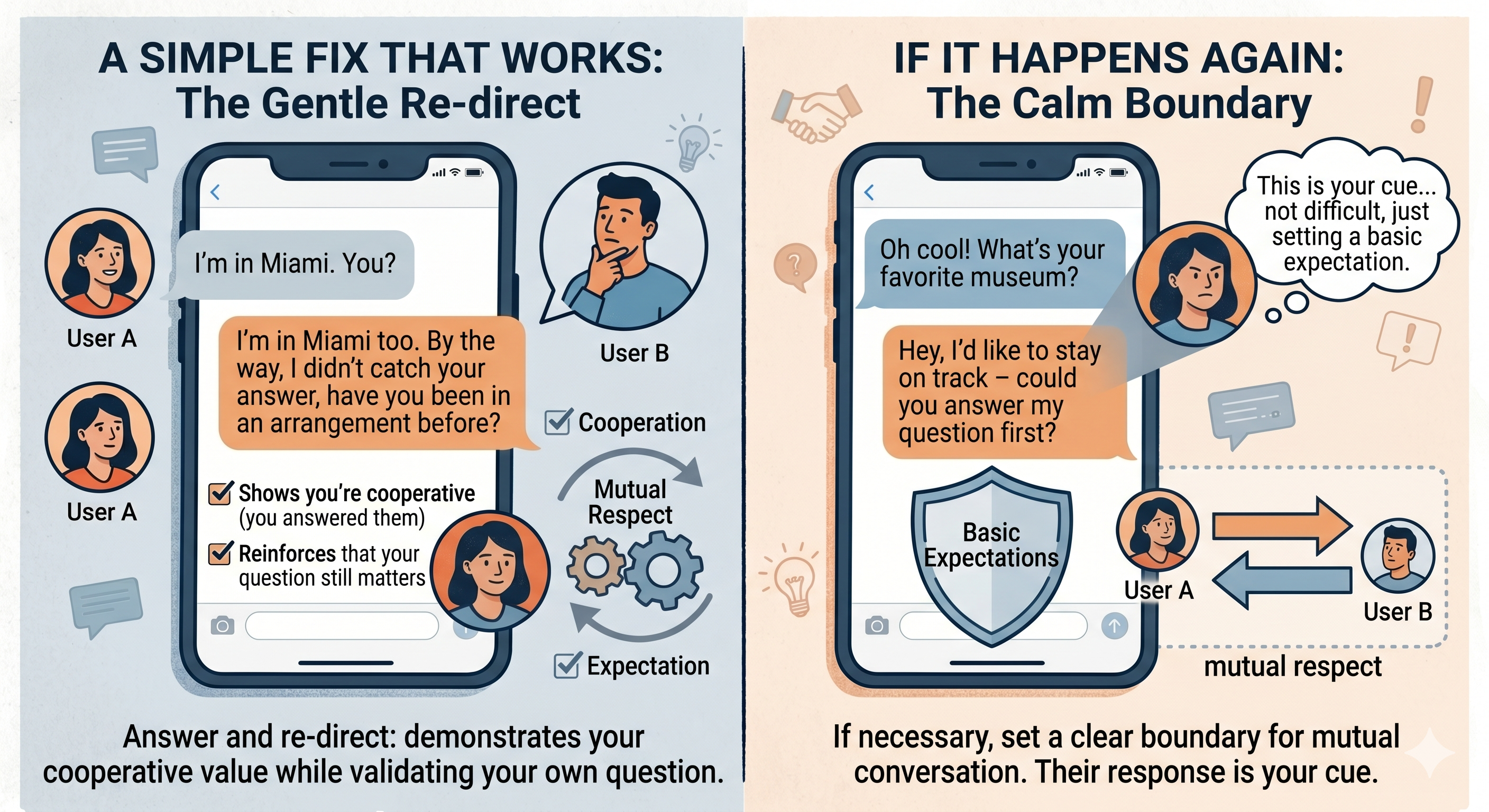
Answer their question then calmly bring yours back.
For example:
I’m in Miami. By the way, I didn’t catch your answer, have you been in an arrangement before?
This does two things:
- It shows you’re cooperative (you answered them)
- It reinforces that your question still matters
If they ignore it again? That’s your cue.
At that point, you can be a bit more direct:
Hey, I’d like to stay on track - could you answer my question first?
You’re not being difficult. You’re just setting a basic expectation for mutual respect.
The Hidden Benefit: Fast Filtering
One of the most useful things about this pattern is how quickly it shows if you and someone are compatible.
People usually fall into two groups:
1. The course-correctors
They realise they missed your question, answer it and the conversation gets better. These are usually worth continuing with.
2. The deflectors
They give a quick, dismissive answer or ignore you again and keep moving forward with their own plans. These are often the ones who will keep dominating, interrupting or ignoring you later.
That’s not someone you need to “figure out.” That’s someone you can move on from—early and efficiently.
Respect Is Built in Small Moments
We often think of respect as something big and obvious. But in conversations, it’s built through tiny actions:
- Answering what was asked
- Acknowledging the other person’s input
- Taking turns naturally
Ignoring a question might seem small, but it breaks that rhythm. Repeatedly doing so shows a pattern—and patterns are what relationships are made of.
Final Thought
You don’t need to overthink every message. But you also don’t need to ignore clear signals.
If someone doesn’t answer a straightforward question right away, it might give you a clue about how they’ll deal with more complex questions later on.
Sometimes, the best way to filter people out is not with a complicated plan, but simply by noticing who is listening when you speak.